Started taking creatine for the gym, ended up noticing something unexpected about my mood
redditNot sure if this will help anyone but I wanted to put it out there just in case, because I really wish someone had told me this earlier.
I'm a woman in my mid 30s and honestly the past year my emotions have been more intense than I was used to. Mood swings, getting stressed over small things, feeling kind of on edge sometimes. I figured it was just part of life at this age, hormones maybe, or the fact that I quit my job and started working on my own projects that weren't really generating income yet. That kind of uncertainty does something to you, I guess.
I started taking creatine about a month ago, just a small amount, a teaspoon a day which is roughly 3-4g. My main reason was honestly just the gym, nothing more exciting than that.
But after maybe a week or so I started feeling... quieter inside? Like the usual stress responses just weren't hitting as hard. I felt more patient, more grounded. Things that would normally spiral in my head just kind of didn't. I still have hard days obviously but something genuinely shifted and I noticed it pretty clearly.
I did a little reading after and apparently creatine might support brain energy in some way, so maybe that plays into it? I'm not a scientist and I could be totally off but the timing really did line up for me.
Anyway, just wanted to share in case any other women are experiencing something similar and haven't considered this. It might be nothing for you, or maybe it helps a little. Either way I think it's worth knowing about
MarianqLefone2026-03-06344 helpfulView → My experience with Creatine for sleep deprivation, and apparently gastrointestinal cleansing.
redditLast night I had only 2 hours of sleep. Recently, I have been reading about using creatine in higher doses for sleep depravation, so around 4 in the morning when i felt like all hope is lost and I need to try something, I ingested about 12-14g of cocacola flawoured creatine, making sure I drink plenty of water afterwards.
After the 2 hours of sleep, I woke up as if I snorted a line. I didn’t even need my usual morning caffeine, which I found quite weird but pleasant. All throughout the day, I felt super clear-minded and present. My brain was working better than I can ever remember. Freaking superb feeling.
What I found not to be so pleasant was my massive case of diarrhea I had in the morning. I must have lost a few pounds as I was shitting my brains out, was even worried I couldn't set out for my errands, but it luckily stopped at about noon, afterwards only having a somewhat weird feeling in my stomach, now I actually feel very cleared out as if this massive case of creatine-induced diarrhoea was somewhat even beneficial.
I rate my experience 8/10 would do it again.
Any of you guys have similar experiences, any way to combat the shitting? Maybe eating after/before?
Happy_Genghis_Khan2026-02-22185 helpfulView → The "5g per day" creatine recommendation is based on muscle research. Here's what the latest brain studies say.
redditTL;DR: I have been taking 5g/day creatine for 3 years now and am now thinking to increase the per day dosage. After digging into 1000+ studies, I found some wild stuff about high-dose creatine for cognitive function. Single doses of \~20g can increase processing speed by 24.5% and the effects last 9 hours. Also, vegetarians respond \~2x better than meat-eaters. Full breakdown below with sources.
Why I did this:
I have been taking 5g/day creatine for 3 years now. Like most people, I took the standard "5g per day" advice and never questioned it. It worked fine for my training, but I kept seeing conflicting claims about creatine for brain function. So I started reading actual papers to figure out if I should increase my dosage. 3 months and 1000+ studies later, here are the findings that genuinely surprised me:
1. The "5g for everyone" dose is based on old muscle research, not brain optimization
Most dosing recommendations come from 1990s studies measuring muscle saturation. But your brain is different.
A 2024 study (Gordji-Nejad et al., Nature Scientific Reports) found that a single high dose of \~0.35g/kg (\~24.5g for a
70kg person) during 21-hour sleep deprivation:
• Improved processing speed by 24.5%
• Increased brain creatine by 4.2%
• Effects peaked at 4 hours and lasted up to 9 hours
• Prevented the brain pH drop that normally happens during fatigue
Even more interesting: A 2025 review (Fabiano & Candow) analyzed dose-response data and found:
• 2-5g/day = 4-6% brain creatine increase
• 8-10g/day = 7-8% increase
• 15-20g/day = 9-11% increase
For cognitive purposes, higher doses appear significantly more effective. This is exactly why I am now thinking to increase my per day dosage.
2. Vegetarians get nearly 2x the cognitive benefit
Multiple studies (Rae 2003, Benton 2011) show vegetarians have much lower baseline brain creatine and see dramatic improvements in working memory and reasoning after supplementation. One study found p < 0.0001 for intelligence improvements in vegetarians, basically unheard of in nutrition research.
Meat-eaters already get \~1-2g/day from food, so their brains are partially saturated.
3. Creatine does NOT cause kidney damage, dehydration, or cramping, but the myths persist
This one genuinely angered me. I found the original studies that started these myths and they're either:
• Misinterpreted (one case study of someone with pre-existing kidney disease)
• Actually showed the opposite (Greenwood 2003 found LESS cramping in NCAA football players taking creatine vs placebo
The ISSN Position Stand (2017) reviewed 1000+ studies and concluded: zero evidence of adverse effects in healthy individuals at recommended doses. Long-term studies go up to 21 months with no kidney function changes.
After 3 years at 5g/day, my bloodwork is perfect. The safety data is rock solid.
4. Women have been underserved by creatine research, but that is changing
For decades, most creatine studies excluded women or had tiny female sample sizes. Recent research (Smith-Ryan 2021) confirms creatine works for women without the "bloating" fears, benefits across the lifespan without marked body weightchanges.
New 2025 studies are specifically examining menstrual cycle effects and menopause benefits.
5. The mechanism for brain benefits is fascinating
Your brain is 2% of your body weight but uses 20% of your energy. During high cognitive demand or sleep deprivation, ATP in your prefrontal cortex gets depleted.
Creatine acts as a rapid-response energy buffer, literally regenerating ATP in milliseconds. A 2015 study found 20g/day for 7 days increased corticomotor excitability by 70% during hypoxia (low oxygen).
6. Meta-analysis data is stronger than most people realize
I compiled the major meta-analyses:
• Chilibeck et al. (2017): +1.37kg lean mass in older adults, n=721
• Zhang et al. (2025): SMD 0.43 for strength gains across populations
• Xu et al. (2024): SMD 0.31 for memory improvement, more beneficial for females
Effect sizes this consistent are rare in nutrition science.
7. Most "advanced" creatine forms are marketing
Creatine monohydrate has the most research, is the cheapest, and has 95%+ bioavailability. Buffered creatine, creatine
HCL, liquid creatine, none show superior absorption in head-to-head studies. The "better absorption" claims are mostly unproven.
What I am doing differently now:
After 3 years at 5g/day, I am now experimenting with:
• For training: 5g/day consistently (works fine for muscle)
• For cognitive demands: 15-20g single dose before intense mental work or when sleep-deprived
• Timing: Post-workout with carbs when possible, but consistency matters most
I am planning to try a month at 10g/day split into two doses to see if I notice cognitive differences, then potentially experiment with 15-20g on heavy work days.
Sources and Interactive Database:
I organized all the major studies into a searchable database because I got tired of PDF hunting:
[https://creatine-sandy.vercel.app](https://creatine-sandy.vercel.app/)
Includes:
• 50+ major studies with effect sizes, sample sizes, and direct links to papers
• Interactive myth-busting (click myths to reveal the actual research)
• Dose-response visualizations for both muscle and brain benefits
• Safety timeline from 1832 to 2025
• Filterable by category: muscle, cognitive, safety, high-dose protocols
Everything is cited with PubMed links if you want to read the full papers.
Questions I still have:
1. Why has not the high-dose cognitive research filtered into mainstream recommendations yet? The 2024 Nature study se groundbreaking.
2. Are there long-term (5+ year) studies on 10g+ daily dosing for cognitive purposes?
3. What is the optimal cycling protocol for high-dose cognitive use vs continuous low-dose?
4. For those who have increased from 5g to 10g+ long-term, what subjective differences did you notice?
Would love to hear if anyone else has gone deep on this research or experimented with higher doses. What did I miss? Has anyone here gone from 5g to 10-20g daily? What was your experience?
akmessi28102026-02-091254 helpfulView → 3 years of creatine use, now 3 months off
reddit(M25) After taking 5 grams of creatine daily for three years, I’ve now been off it for 3 months. I wanted to share my experience with both using and stopping this supplement.
I started lifting weights about four years ago. When it got more serious, protein shakes and creatine were added to the mix. Before I continue: There isn’t much solid evidence linking creatine to hair loss: the one (small) study that exists isn’t representative. Still, I started looking at it more critically because my hairline has receded a bit over the past few years.
Just to be clear: hair shedding (temporary, caused by things like stress, seasons, or diet) ≠ hair loss from male pattern baldness (gradual, genetic, DHT-related). There are no direct studies connecting creatine to hair loss, but purely from logical reasoning, if creatine increases DHT, it could be an accelerating factor if you’re genetically sensitive. I don’t believe creatine causes baldness, but I do think it might give a little push if you’re predisposed.
Why did I stop?
I simply wanted to know what creatine was really doing for me. I’d always been convinced of the benefits (both physical and cognitive), but after three months without it, I hardly notice any difference:
• Strength and endurance feel the same.
• No weight loss (I expected about ~2 kg from water loss).
• Muscles maybe feel slightly less full/round, but I still get a solid pump and look just as muscular as before.
Maybe I wasn’t combining creatine optimally with other factors (hydration, nutrition, training intensity)—I don’t know.
Moral of the story: every body responds differently. It can be very valuable to stop a supplement for a while and see what it’s really doing for you. Stay critical, keep asking questions, and above all: stay healthy.
ComprehensiveOven3412025-09-21280 helpfulView → 15 g of creatine daily has changed my life
redditBackground: 28M, middle-school teacher, suffered from chronic fatigue/ loss in cognition speed caused by long COVID from an infection two years ago almost to the date. I don't use caffeine.
I began taking creatine 9 months ago as part of an effort to regain physical strength and mental stamina. At this point, I would be tired no matter if I slept 6 hours or 10 hours. In fact, last summer I slept 10-11 hours most days and still was rarely refreshed. My symptoms were largely improved from baseline, but I was doing my best to eradicate them.
I started at 5 g/day. Noticed benefits in terms of strength and stamina (I could hit a workout after work and not feel like Sisyphus). Didn't really notice any mental benefits.
Fast forward to three weeks ago. I started back the school year and had heard about higher doses of creatine being beneficial for cognition. I started taking 15 g/day and immediately could see a difference in cognition. Before COVID my brain worked very quickly, but afterwards it was noticeably slower and I had a bit of a stutter—something I've never suffered with in my life. These issues had gotten better over time, but 15 g/day has almost eradicated them. Instead of writing a paragraph over the benefits, I'm just going to list them.
* I have much more patience dealing with students.
* I have significantly more mental energy throughout the day despite teaching one class more than I usually teach.
* I am able to handle all the extraneous tasks of being a teacher with significantly more ease, even though I have a few more responsibilities this year compared to last year.
* The idea of having to perform small tasks, like sending an email, does not exhaust me.
* I no longer feel like I have to lie down when I get home from work. In fact, I have energy to come home and immediately do whatever needs to be done in my personal life (this was definitely not the case the last two years).
* My brain works much quicker—almost as quick as it did pre-COVID.
* My very mild stutter is 98% gone.
* I have no way of definitively tying this one to creatine, but my Apple Watch is showing increased deep sleep starting a couple days after I began my increased creatine consumption. I am genetically disposed towards longer deep sleep, but long-COVID seemed to have impacted it hard. I would average 50 mins–1 hour. The past couple weeks (on days I didn't intentionally stay up very late) I have hit around 1 hour 15 mins, and last night I hit 1 hour 40 mins. I have also noticed that I am having more incidents of deep sleep periods later in the night as well as early in the night, whereas before they were almost always isolated to the first two hours of sleep. I know sleep tracking isn't totally accurate at all, and Apple Watch does have a problem with under-reporting deep sleep, so take this one with a grain of salt.
* Speaking of sleep, I can function much better on shorter periods of sleep. It seems to have reduced my sleep need a little bit.
* Niche: My aim in Counter-Strike is godlike even on very tiring days. Before, it would be highly correlated with how tired I was. Yes, I do use this as a serious metric.
* I seem to get going in the mornings quicker. I wake up at 5:30 AM on weekdays, which is still brutal but I can handle it much more.
I've experienced no side effects save for slight hair thinning when I originally began taking 5 g/day. Yes, I know all about the studies but I also know what I felt when running my fingers through my hair. Thankfully, it seems to have stabilized and recovered mostly. No bloating, no water retention, no diarrhea, nothing. I get plenty of hydration daily: 4 cups of decaf green tea, 4 cups decaf coffee, one cup electrolytes in the morning.
tired454532025-08-241541 helpfulView → ★★★★★Works in 2 weeks of intake
amazonIts been 2 years since im using it.... go for it
★★★★★No flavour, you should be taking enough water otherwise you will get loose motions.
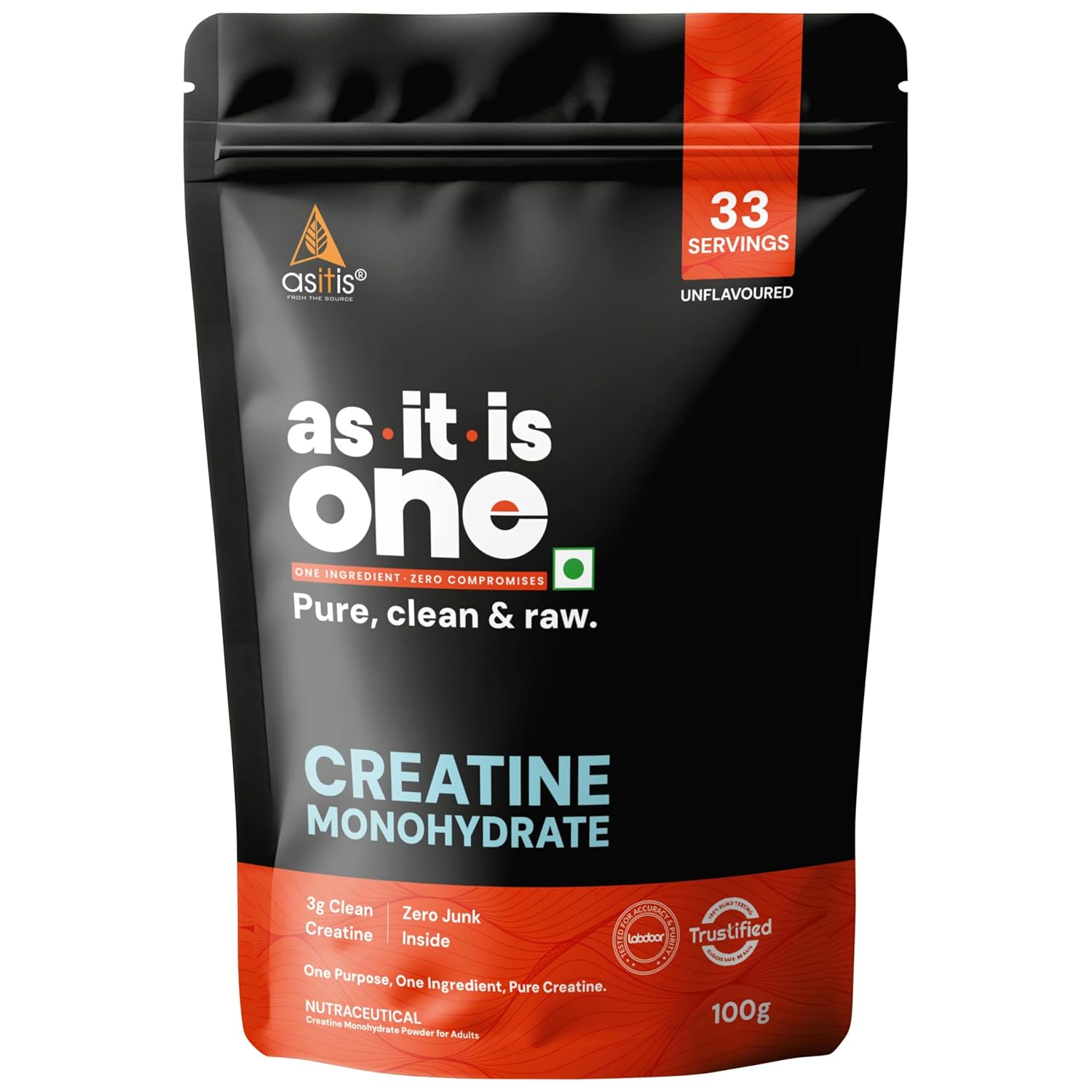
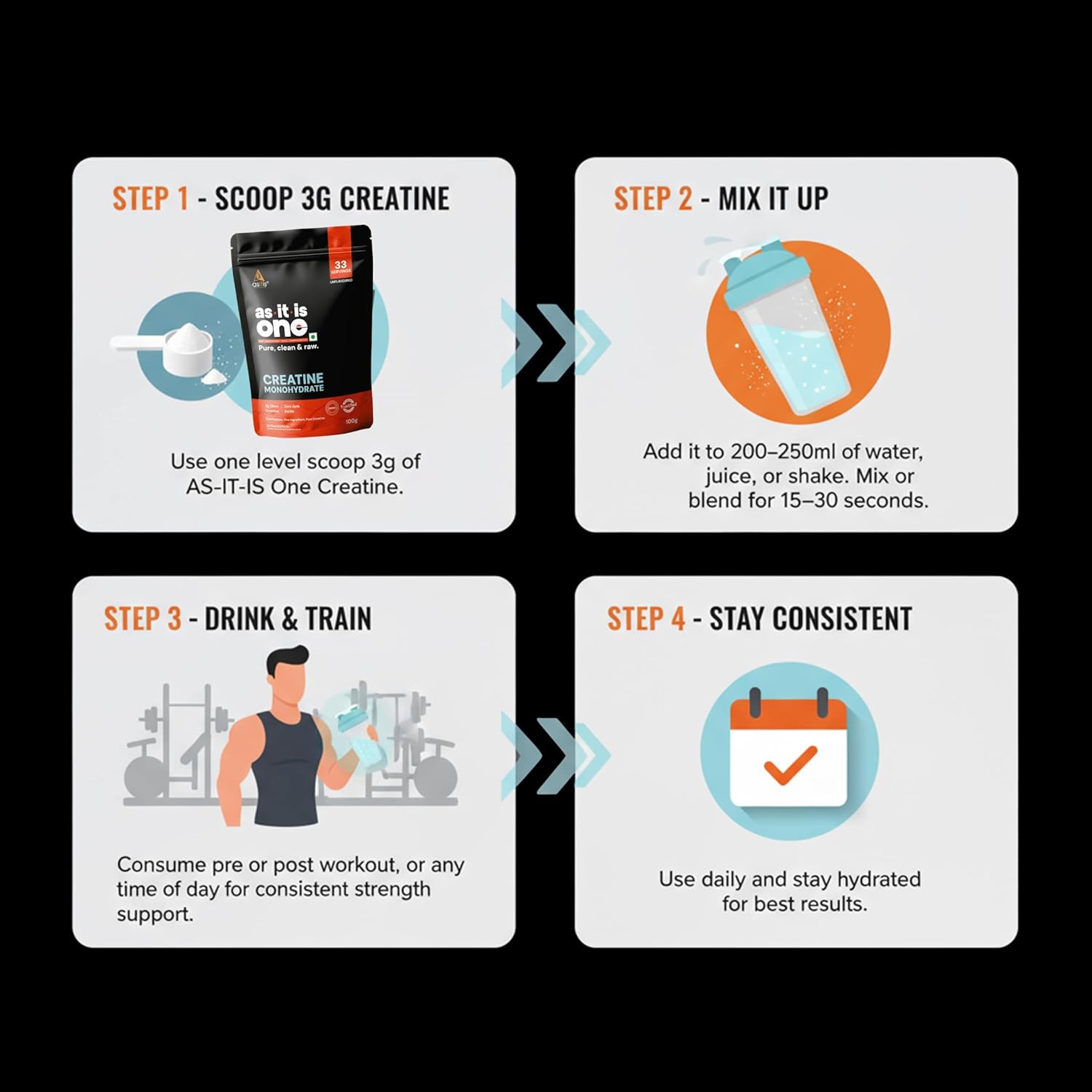
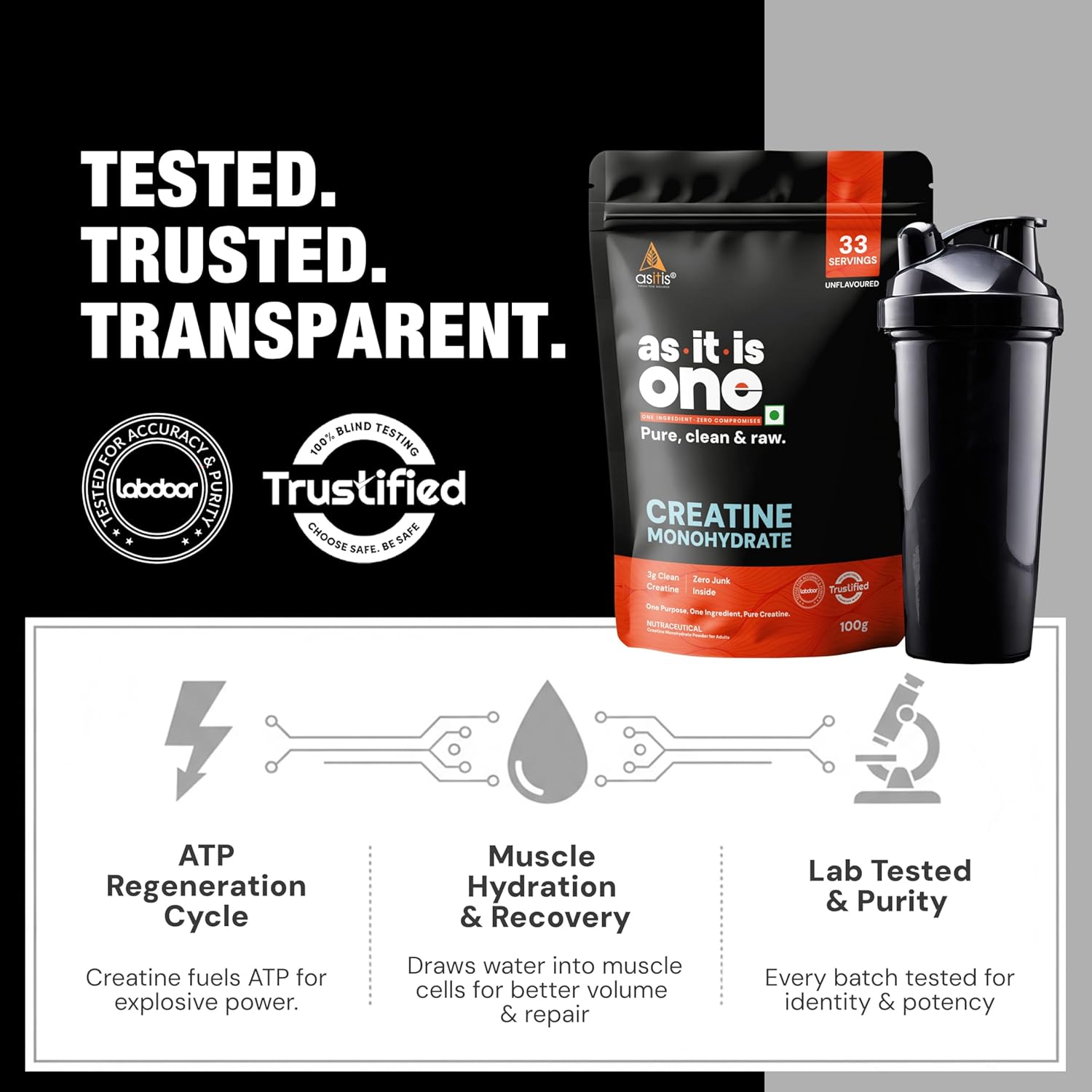
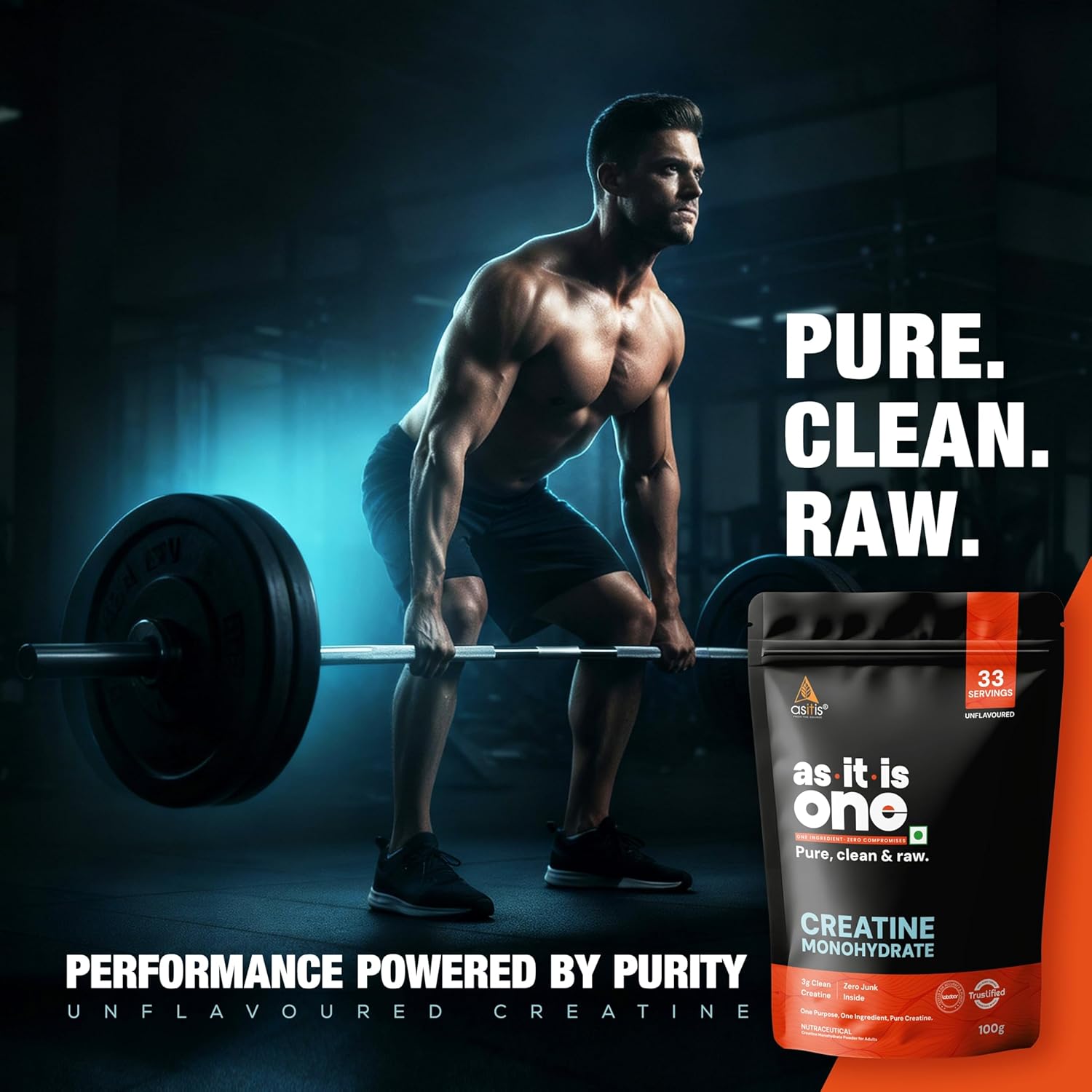
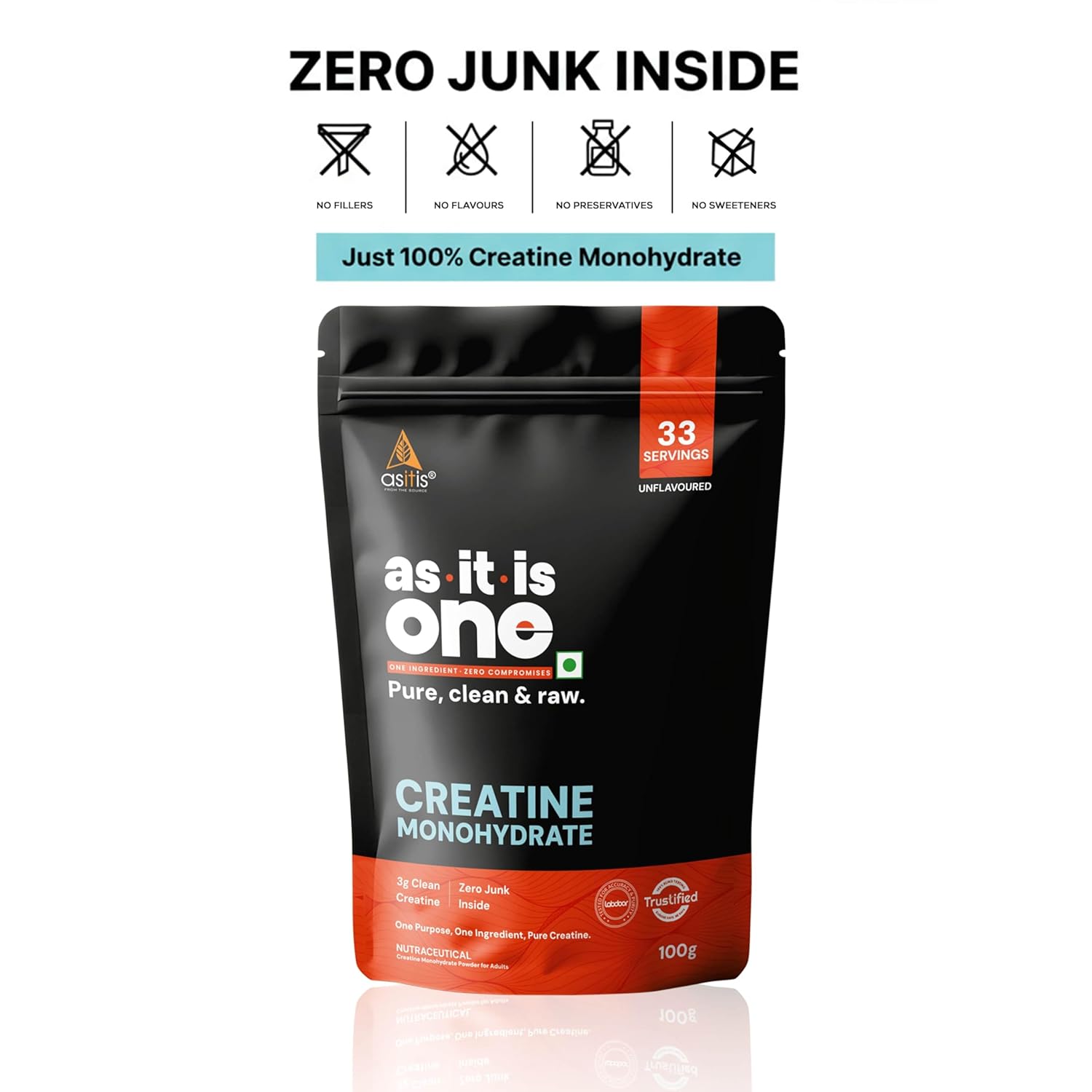
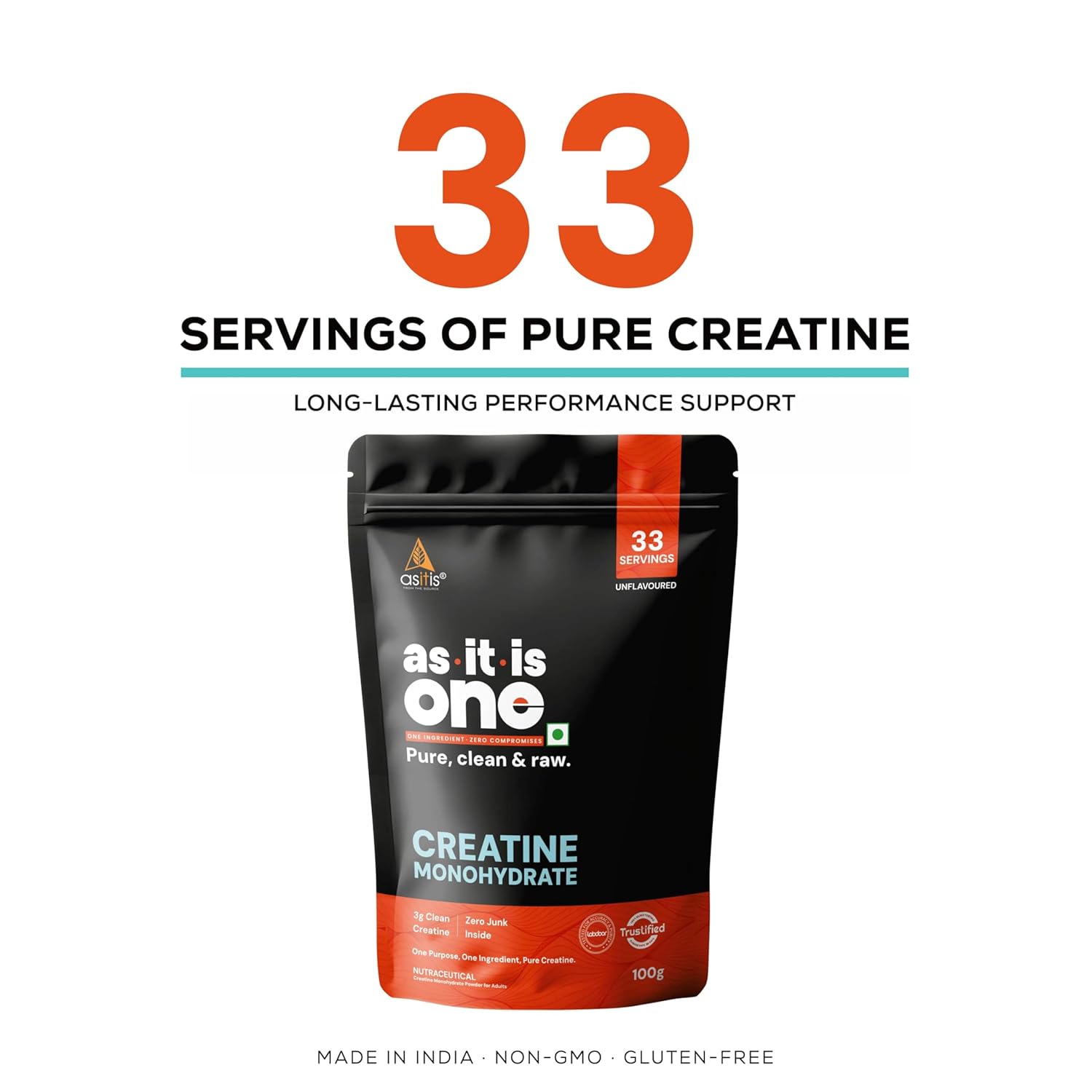
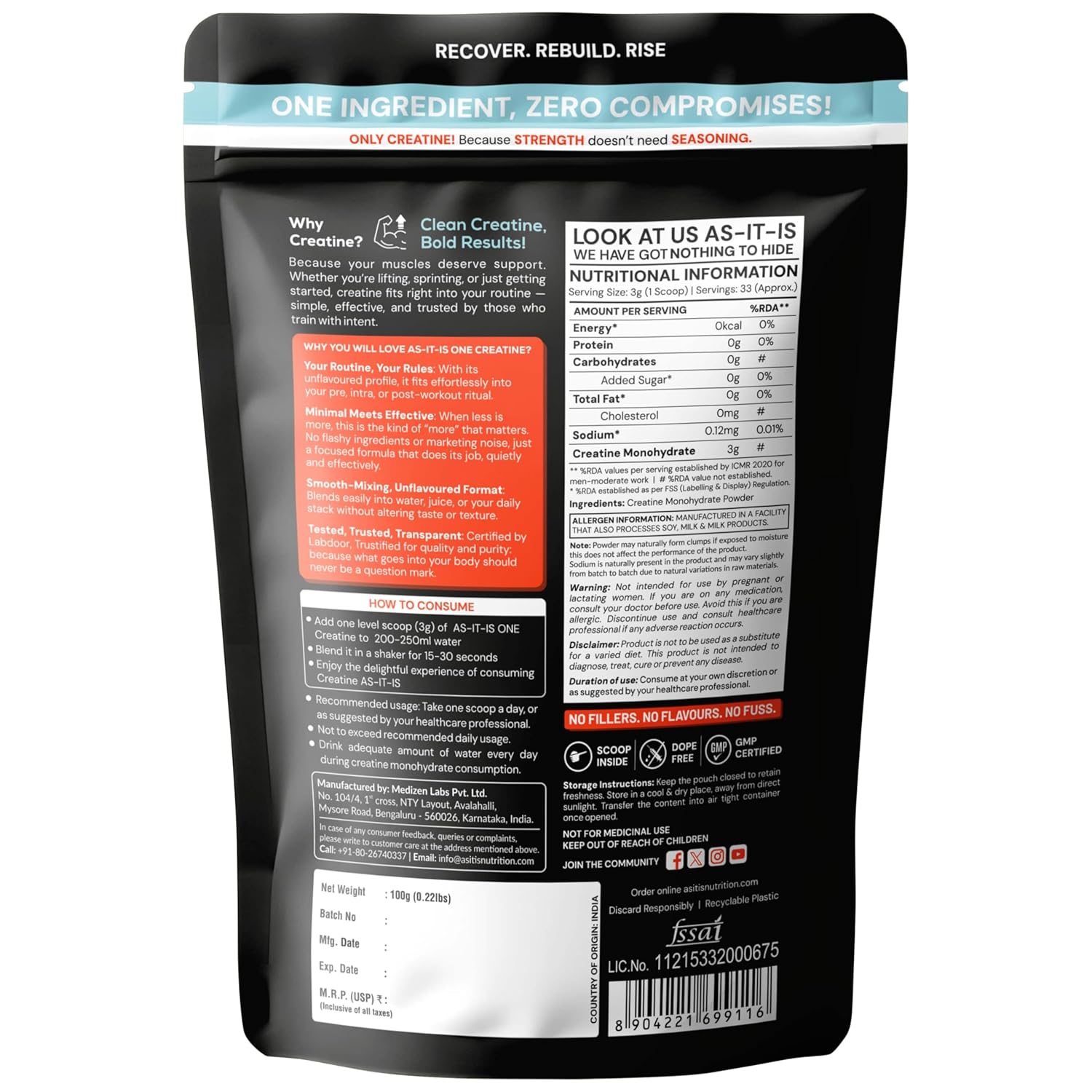
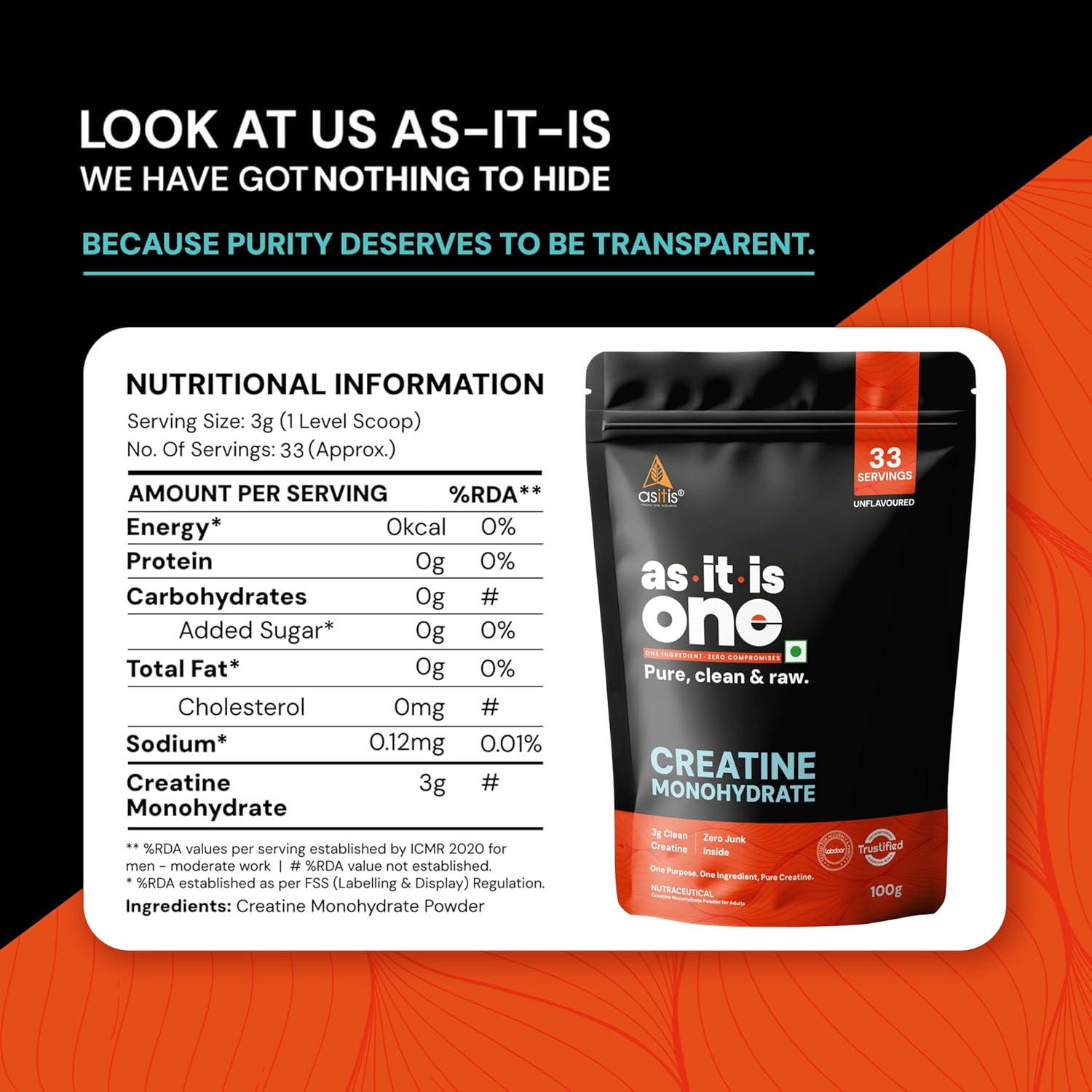
amazonI have been using AS-IT-IS One Creatine Monohydrate (100g, Unflavoured) for a long time, and overall, it has proven to be a reliable and effective supplement. Being unflavoured, it is easy to mix with water, juice, or protein shakes, which makes it ideal for long-term daily use without adding extra taste or sugar. When I first started taking it, I experienced loose motions for a few days, which can happen to new users. This is a common adjustment phase as the body adapts to creatine supplementation. After that initial period, my digestion normalized, and I didn't face any further issues. In terms of performance, this creatine works as expected. With regular use and consistent workouts, I noticed improvements in strength, endurance, and recovery. Workouts felt slightly easier at high intensity, and over time, I saw gradual increases in muscle size and power. This aligns with the general benefits of creatine monohydrate, and this product delivers those results reliably. Mixability is decent, though like most monohydrate powders, a small amount can settle at the bottom if not stirred well. It dissolves better in warm liquids or shakes, but this is a minor issue considering the overall benefits. The price and quantity are also attractive. 100g lasts a reasonable period for daily supplementation and is a cost-effective option compared to other brands, especially for someone who wants pure creatine without fillers or additives. Pros: Pure, unflavoured, and versatile High-quality creatine with visible performance benefits Long-term, cost-effective option Easy digestion after initial adjustment Cons: May cause loose motions initially for some users Mixability could be slightly better Results require consistent, daily use Verdict: AS-IT-IS One Creatine Monohydrate is a no-frills, functional creatine that delivers on strength, endurance, and muscle gains. It's best for users who want a reliable, long-term creatine option without extra flavours or additives. For serious gym-goers, this is a solid and affordable choice.
Nice product par abhi use karke dekhte hai
★★★★★Great product for this price
amazonGreat product considering the price. You can compare with other brands but you can not ignore this product. Mix well good results as much as I have used 3 packs of this till now.
★☆☆☆☆Not as it is supposed to be. Not Good.
amazonI dont know whats wrong with it, but i dont see any effect on my body and workout of this product. I've taken it for 20-25days, and keep my workout as usual. I've also tried creatine from NUTRABAY brand, and I'm going back to it. Will never buy from this brand. Also, upon mixing in water, there's some powdry residue left which is unsoluble, and give sandy taste. Personally, i wont recommed this brand to anyone.
 ▶
▶